

Last updated: October 21, 2026
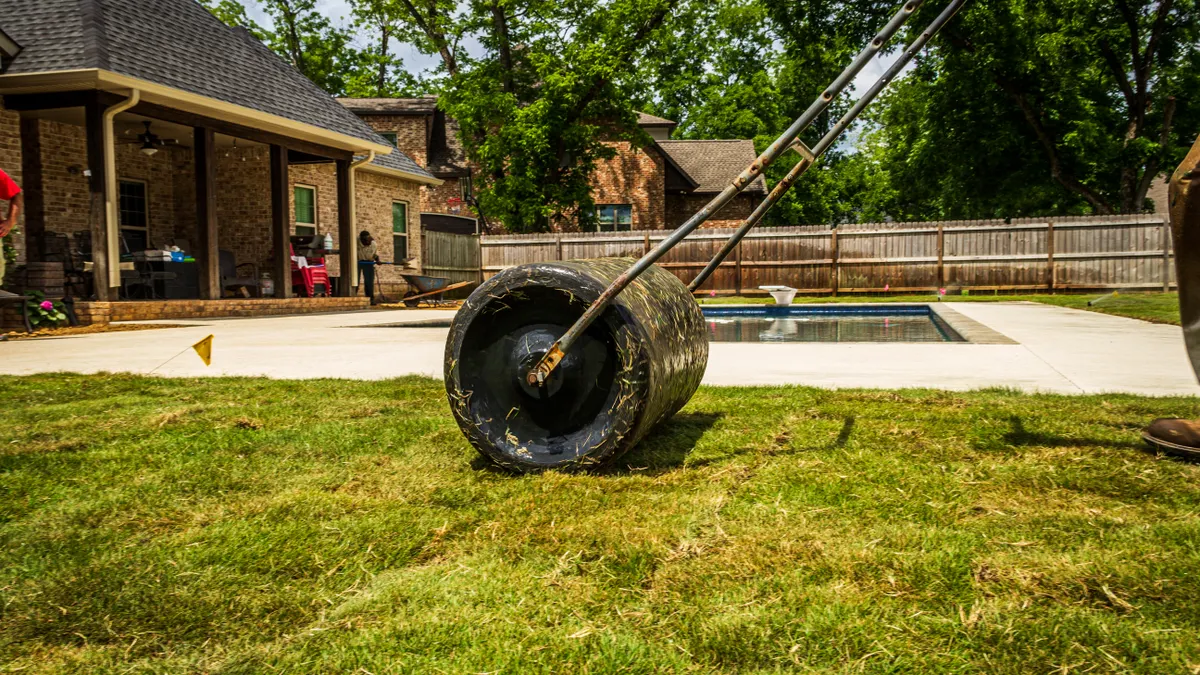
Quick Answer: choose a 24- to 36-inch water-filled lawn roller for sod, and start with a partial fill if the soil is soft. For most homeowners, that means a fillable roller you can empty for transport and use lightly on day one.
A lawn roller for sod should be light enough to press the new turf into the soil without squeezing water out of it, and wide enough to cover your yard in a few passes. For most homeowners, that means a water-filled roller in the 24- to 36-inch range; for small patches, a hand roller is usually easier to manage than a tow-behind model. This guide to how to choose a lawn roller for sod keeps the decision practical: match the roller to the yard, the access, and the first week of aftercare.
Key takeaways
- Pick the roller for the job, not the yard in general: sod wants firm seam contact, not heavy compaction.
- Water-filled rollers are a common default because they are empty when you move them and heavier only when you need them.
- Tow-behind rollers save time on larger lawns, but they can be too aggressive if you overfill them or roll too soon.
- Hand rollers work best on small areas, narrow strips, and fresh seams where precision matters more than speed.
- Roll sod soon after installation, but only when the ground beneath is firm enough to support the roller without rutting.
Which lawn roller for sod fits your yard size?
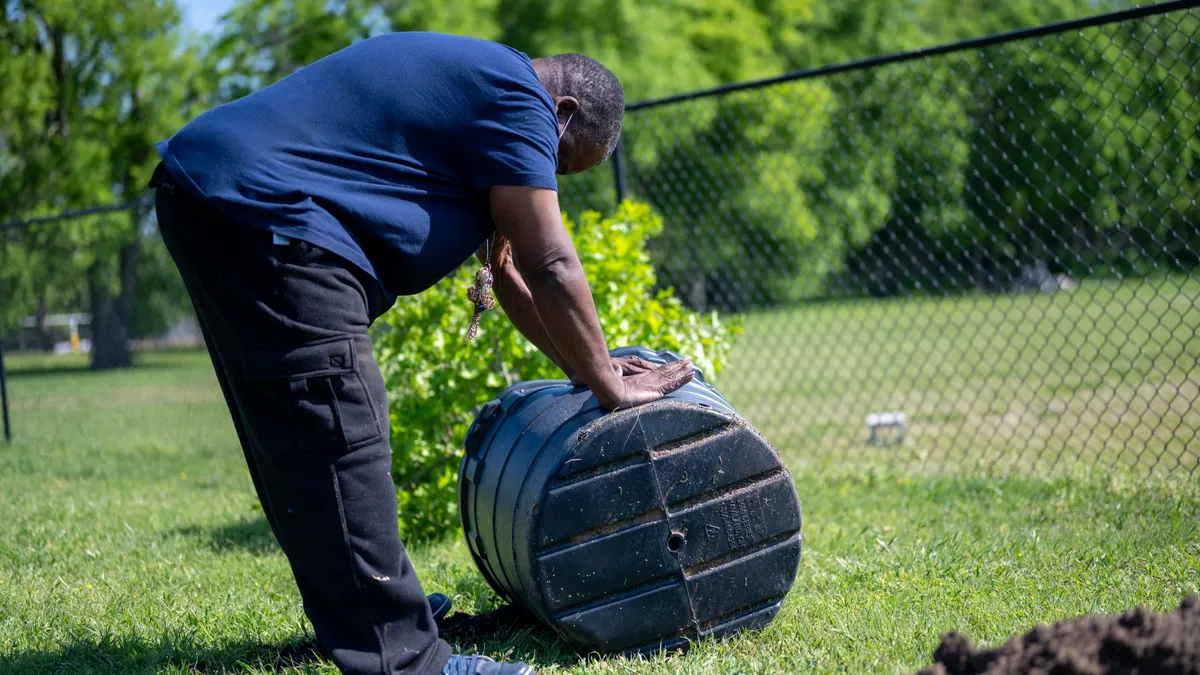
The right lawn roller for sod is the one that matches your lawn size, access, and the amount of pressure you actually need. A 24-inch hand roller suits small repairs and tight spaces; a 36-inch tow-behind roller makes more sense for a full yard or a long run of fresh sod.
Start with the area you need to cover in one session. If you are working around beds, fences, narrow side yards, or curved edges, a hand roller is easier to steer and less likely to leave obvious tracks. If you have a broad, open lawn and a riding mower or garden tractor, a tow-behind roller is faster and more practical.
The common mistake is buying the biggest roller available and assuming bigger is better. Bigger can mean harder to turn, harder to store, and more likely to leave low spots if the weight is excessive for a newly laid lawn. Sod needs contact with the soil below it; it does not need the kind of deep compaction you would use on a gravel base or a patch of bare subsoil.
A useful rule is to think in passes, not brute force. A roller around 24 to 36 inches wide lets you overlap slightly and work the surface evenly. Wider rollers are not automatically better if your lawn has slopes, tight corners, or recently irrigated soft spots. For those areas, smaller equipment gives you more control.
If your sod install is part of a broader aftercare plan, the roller choice ties directly into mowing, watering, and settling. The sod aftercare, maintenance, and troubleshooting guide belongs with this decision, because the roller is only one part of the first week.
What roller material should you choose?
Steel or polyethylene can both work for sod, but the most flexible choice is usually a fillable roller rather than a fixed heavy one, because it gives you useful weight without forcing you to move a heavy machine empty. Steel is durable and stable; plastic or polyethylene is lighter to handle and usually cheaper to live with in a residential yard.
Steel rollers feel solid and resist flexing. That matters if you want a straight, even pass and a roller that tracks predictably behind a mower or by hand. The downside is simple: if it is a solid steel roller rather than a fillable one, it is heavy all the time. That makes it harder to move, store, and load into a truck.
Water-filled rollers are the practical middle ground. Empty, they are much easier to transport. Filled, they gain the weight needed for sod settling. That design is why many homeowners choose them first. They also let you adjust how much pressure you apply. If the ground is very soft, you can fill them partially instead of using full weight.
Sand-filled rollers exist too, but they are less forgiving for most homeowners. Sand adds more permanent weight, which can be useful on firm ground, but it makes the roller a nuisance to move and empty. For sod, that extra weight often gives you more compaction than you need, especially on the first pass.
Plastic rollers are not “weaker” in the way people often assume. The shell does not do the settling; the mass inside does. A quality fillable roller with a decent axle, a smooth drum, and a reliable drain plug can be a better buy than a cheap solid roller that is awkward from day one.
If you want one clean recommendation, choose a fillable roller unless you already know you need constant heavy weight. That choice works for many sod jobs and avoids the worst trade-off of solid models.
How much weight do you actually need for sod?
You need enough weight to press the sod against the soil, not enough to crush the crown or squeeze water out of the root zone. For typical residential sod work, a light to moderate roller setting is the safer choice, and full ballast is often unnecessary on the first pass.
This is where shoppers get tripped up. They see roller capacity and assume more is better. For sod, it usually is not. Fresh sod sits on a shallow interface of roots, soil, and moisture. The goal is contact, especially along seams and edges, so the turf starts knitting into the soil below it. Heavy rolling can flatten the blades, deform soft spots, or create low areas that hold water.
A water-filled roller helps because you can tune the load. Start with partial fill if the soil is damp or recently irrigated. If the lawn is firmer and the sod edges are not seating, you can add more water for another pass. That flexibility matters more than maximum capacity.
Avoid trying to “fix” an uneven lawn with a roller. A lawn roller is not a grading tool. It will not correct settled trenches, raised seams, or major dips. It can only help seat sod and smooth light surface irregularities. If the lawn surface is obviously uneven before rolling, more weight usually makes the problem worse rather than better.
One practical way to think about it: use the least weight that leaves the sod in contact with the base soil after a light pass. If the grass looks bruised, the ground squishes underfoot, or the drum leaves deep marks, the setup is too heavy for current conditions.
That is the main reason a fillable roller beats a fixed heavy roller for sod. It gives you a margin for mistakes, and sod punishes the wrong weight faster than mature turf does.
When should you roll sod, and when should you wait?
You should roll sod after installation only when the base is firm enough to support the roller and the sod is still fresh enough to seat into the soil. Rolling too early on a muddy base creates ruts; rolling too late misses the point of the tool.
The best timing is the same day as installation or very soon after, before the seams dry and lift. The sod should be laid flat, and the soil beneath should not be saturated to the point of squishing underfoot. If your boot sinks deeply or leaves a sticky footprint, the roller will likely do the same.
The sequence matters:
- Check the ground underfoot. If the surface is firm with slight give, the lawn can usually take a light rolling. If water rises or the soil shifts under pressure, wait until it drains.
- Set the roller to a light or moderate fill. Empty-to-partial is safer than full ballast on day one, especially on clay soil or a newly watered site.
- Roll in straight, overlapping passes across the sod seams, not random circles. The result should be uniform contact without obvious ridges or drum tracks.
- Look for lifted edges after the first pass. If a seam still sits proud, make one additional light pass rather than forcing a heavy one.
- Stop as soon as the sod lies in contact with the soil. The goal is seating, not compression.
Do not roll in the heat of the afternoon if the sod is already stressed and curling. Morning or cooler conditions are easier on the turf and easier on the soil surface. Also skip rolling if a heavy rain has just saturated the yard. Waterlogged ground and rollers are a bad pairing because the wheel can sink before the turf is properly seated.
The first 24 to 48 hours after installation are the most sensitive. That is when the roller matters most and when overdoing it does the most damage.
Should you buy a tow-behind roller or a hand roller?
A tow-behind roller is the better choice for larger open lawns, while a hand roller is the better choice for precision, small jobs, and tight access. The right one depends less on price than on how you actually move across the yard.
Tow-behind rollers attach to a lawn tractor, garden tractor, or sometimes an ATV. They are efficient on long, open runs because they let you cover more ground with less pushing. A 36-inch tow-behind roller is a common practical size for residential use. The drawback is control: on soft sod, it is easier to overdo weight, make turning marks, or miss edge areas. You also need a machine to pull it.
Hand rollers are simpler. They are pushed or pulled by hand, which gives you a better feel for the surface. That is useful around patios, walks, short strips of sod, and areas where you need to stop exactly at an edge. A hand roller is also easier to store in a garage corner and easier to rinse off after muddy work.
The mistake is assuming tow-behind is automatically “professional” and hand roller is “small-time.” On a 300-square-foot patch of sod, the hand roller may be the smarter tool because it gives better control and less fuss. On a wide front lawn, hand rolling the whole area can turn into a tiring, uneven job that takes several passes.
There is also a stability trade-off. Tow-behind rollers can bridge minor undulations, which sounds helpful until they leave uneven pressure patterns on softer sod. Hand rollers force you to stay engaged with the surface, which usually produces a more even result on fresh turf.
If you only buy one roller for a normal home lawn, a fillable hand roller is often the safer default. If your property is large and you already have the pulling equipment, a tow-behind roller makes more sense.
What features matter most when you shop?
The features that matter most are a drain plug, a smooth drum, a comfortable handle or hitch, and a width you can actually maneuver around your yard. Those details decide whether the roller is useful or irritating.
A drain plug is not a luxury on a fillable roller. It lets you empty the drum for storage, transport, or seasonal cleanup. Without it, a water-filled roller becomes a clumsy object you avoid using. Look for a plug that seals well and is easy to reach without tipping the whole unit awkwardly.
The drum surface should be smooth. A ridged or dented roller can imprint the soil unevenly, especially on fresh sod. You want the roller to distribute pressure evenly across the turf, not concentrate it in lines.
Handle height matters on hand rollers. If the handle is too low, you will stoop and lose control. If it is too high, you fight the machine on every turn. Because of that, the right height is the one that lets you keep steady pressure without straining your back on a 15- to 20-minute pass.
For tow-behind models, check the hitch compatibility before you buy. A roller that does not match your mower setup becomes a return headache. Also check whether the fill port is easy to reach; a tiny opening makes filling and draining slow enough to discourage use.
One detail people overlook is storage. A roller that stores flat, drains fully, and does not trap water in seams is easier to keep in service. Standing water left inside a drum can become stale, messy, and inconvenient to deal with later.
Price is worth considering, but only after fit and fill type. A cheap roller that is awkward to empty or too heavy to move is usually worse than a slightly more expensive model you will actually use.
The final buying choice for most sod jobs
The best all-around choice for sod is a water-filled lawn roller that can be used lightly at first and expanded only if the lawn needs more seat contact. That is why a fillable hand roller is the safer buy for small to medium yards, while a tow-behind roller makes sense only when you already have the machine and the lawn size justifies it.
If your yard is small, curvy, or broken up by beds and walkways, buy a hand roller with a smooth drum and a drain plug. If your lawn is broad and open, choose a tow-behind roller with compatible hitch hardware and a fillable drum. If the soil is soft, clay-heavy, or newly watered, avoid fixed heavy rollers and start with partial fill.
The wrong roller for sod is usually the one that is too heavy, too wide for the space, or too awkward to empty and store. The right roller disappears into the job: it seats the sod, leaves the seams flatter, and does not punish you for using it.
That is the standard I would use before buying.
Drafted with AI; not yet reviewed by a person.