

Last updated: September 10, 2026
Key Takeaways
- A 300-square-foot patch job may carry the same mobilization cost as a larger yard.
- A 300-square-foot or 500-square-foot job often does not need pallet logistics unless access is unusually difficult.
- In hot, dry regions, the first 7 to 14 days after installation are critical because sod dries quickly on the edges.
- Watering instructions are not always a line item, but they affect whether the yard survives the first 2 weeks.
A budget for a sod installation cost calculator by square foot, pallet, labor usually comes down to three buckets: sod by the square foot, delivery or pallet handling, and labor for prep plus installation. Plain and simple. I write about home service pricing and contractor comparisons, and I would split those lines out first, because that is where surprise charges tend to hide.
What a real sod estimate should include
“sod installed for X dollars” sounds tidy. It is not enough. A useful estimate needs to break out materials, prep, and labor; otherwise, you are the one carrying the unknowns.
For a typical residential job, I would expect a quote to specify:
- Sod type and coverage method: square feet covered, plus whether the contractor is charging by the piece, by the pallet, or by the job.
- Site prep: old grass removal, grading, topsoil, compost, rock removal, and soil testing if needed.
- Delivery and handling: pallet delivery, forklift access, hand-carry charges, or tight-access surcharges.
- Installation labor: laying, cutting edges, rolling, and cleanup.
- Watering instructions: not a line item in every quote, but it affects whether the yard survives the first 2 weeks.
- Warranty terms: many local installers limit coverage to workmanship, not grass death from neglect or irrigation failure.
One lump sum? Yellow flag. Maybe habit, maybe strategy. Either way, it makes comparison shopping harder on purpose or by accident. If needed, ask a local landscape professional or extension office to help you read the scope; that is usually better than guessing. Not every vague bid is a bad company. Still, it is harder to know whether one quote includes grading, debris removal, or haul-off while another leaves those out.
A better estimate lets you recalculate the total if the project grows from, say, 600 square feet to 850 square feet. And that matters. Small jobs often cost more per square foot than larger ones. Truck roll. Crew minimum. Delivery fee. None of that shrinks just because the lawn is smaller.
How do I calculate sod cost by square foot?
Multiply the price per square foot by the area, then add labor and prep. That sounds basic because it is basic. But it is also the cleanest way to compare quotes that are packaged differently.
Here is the simple formula:
Total cost = sod material + prep work + labor + delivery/handling + disposal
Ask what sits inside the square-foot number before you trust it. In some markets, it covers only the turf itself. In others, installation is included but old-lawn removal or soil grading is not. Those details are not tiny; they can move the bill more than the sod itself.
A practical way to use the formula:
- Measure the area in square feet.
- Ask for the material rate per square foot.
- Ask whether prep is separate.
- Ask whether labor is priced per square foot, per pallet, or as a flat install fee.
- Add the contractor’s disposal and delivery charges.
Per-square-foot installed pricing is often the easiest comparison point. But check the exclusions. A quote that skips prep can look cheaper on paper and sting later once grading, soil amendment, or debris removal gets added. Sneaky little gap. That is where the math starts wobbling.
The main weakness of square-foot pricing is hidden minimum charges. A 300-square-foot patch job may carry the same mobilization cost as a larger yard. So a bargain per-foot rate can be a trap on small jobs. In those cases, I would compare the total invoice, not the per-foot headline.
What is a pallet of sod really costing me?

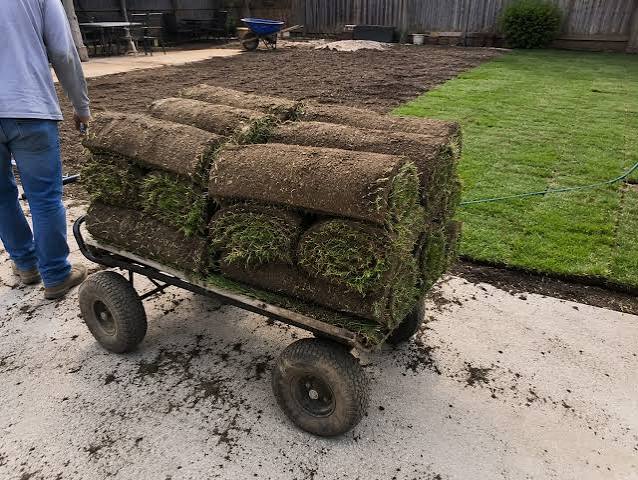
A pallet matters once you are buying enough sod to cover a meaningful area, because many growers and suppliers sell turf by the pallet rather than by the loose piece. The exact square footage per pallet varies by sod type and supplier, so ask for both the pallet count and the coverage per pallet before you compare quotes.
A pallet helps with budgeting because it turns the order into a physical count. If a supplier says the yard needs 12 pallets and your installer charges a handling fee per pallet, the labor line is right there in front of you. Cleaner. Less fog. That is better than decoding a vague “materials included” claim.
A pallet-based quote usually works best when:
- The yard is large enough that pallet math is simpler than patch-by-patch pricing.
- The installer is already coordinating delivery and placement.
- You need help estimating waste from cuts around beds, curves, and walks.
There is a catch. Pallet pricing can make comparing one grass variety against another harder if the coverage per pallet differs. One pallet may cover a different area than another, so the raw pallet price can mislead you. I would never compare only pallet totals without converting to square foot coverage.
Another drawback is access. If the pallets need to be dropped far from the lawn, hand-carry labor can rise fast. A driveway, gate width, slope, and soft ground all affect whether a forklift or a crew can get the pallets where they need to be. Miss that detail, and the estimate is built on sand.
How much should I budget for labor?
Labor often decides whether a sod job feels fair or overpriced. For straightforward installation, labor is usually easier to judge than materials because you can see what the crew has to do: remove old growth, level the grade, set the sod tightly, trim edges, and roll it in.
The labor cost depends on four things that change the quote more than most homeowners expect:
- Prep level: ripping out old turf costs more than laying sod onto a bare, prepared bed.
- Yard shape: curves, tree rings, slopes, and narrow side yards take longer.
- Soil condition: compacted clay, rocky soil, and poor drainage add work.
- Access: if the crew cannot get close to the work area, hand labor rises.
A fast quote that ignores those factors is not a serious quote. Two lawns with the same square footage can take very different amounts of labor. One may be a flat rectangle with easy access; the other may have root issues, old irrigation heads, and a grade that needs correction before sod goes down.
Labor is where a bad job often starts. If the price is low because the crew is skipping prep, the lawn can settle unevenly, dry out at the seams, or develop dead strips along low spots. A sloppy install is not just cosmetic. Poor grading can trap water, and seams that are not tight can dry and shrink.
I would pay more for a contractor who explains the labor steps clearly than for one who gives me the lowest install number and leaves prep vague. Not always the cheapest choice, to be fair. But the labor line tells you whether the contractor is selling turf placement or a finished lawn.
Sod installation cost calculator by square foot, pallet, and labor: a comparison I would actually use
For small to mid-sized jobs, I would use the square-foot method because it gives the cleanest apples-to-apples comparison. On a larger lawn, I would lean toward pallet-based pricing if the supplier and installer are coordinating delivery and the turf coverage per pallet is clearly stated. Labor pricing becomes the tie-breaker; it shows whether the quote includes real site work or just laying grass.
For a practical sod installation cost calculator by square foot, pallet, labor, the key is to force each bid into the same frame before you compare it.
| Criteria | Square foot pricing | Pallet pricing | Winner for [condition] |
|---|---|---|---|
| Easiest to compare quotes | Best when every bidder lists installed price per square foot | Harder unless each pallet covers the same area | Square foot for mixed bids |
| Best for small jobs | Clear for 200-800 sq ft patches | Can hide minimum delivery charges | Square foot for patch repairs |
| Best for larger jobs | Still usable, but math gets repetitive | Often simpler for full-yard installs | Pallet for full lawns |
| Shows waste and overage | Only if the contractor includes overage allowance | Better if pallets are counted with waste built in | Pallet for irregular layouts |
| Risk of hidden prep costs | Moderate to high if “installed” is not defined | Moderate to high if labor is separate | Neither; ask for a line-item scope |
| Labor transparency | Good when labor is included in the foot price | Poor unless install labor is shown separately | Square foot with itemized labor |
| Best for difficult access | Can understate hand-carry effort | Can better show pallet handling costs | Pallet for tight access |
| Best for phased work | Easier to budget in sections | Pallet counts may be awkward if work is split | Square foot for phased installs |
| Best for contractor accountability | Good if prep and cleanup are named | Good if coverage per pallet is written out | Either, with written scope |
My view is straightforward: the best calculator is the one that makes the contractor name the square footage, the pallet count, and the labor scope separately. That is usually the easiest way to catch a quote that looks low because it is incomplete.
Which pricing method is best for your yard size?
Square-foot pricing wins for a small yard; pallet pricing wins for a broad, full-property install. That is the practical line I would use.
If your project is a front-yard repair, side-yard patch, or a small backyard section, square-foot pricing is easier to control. Measure the area, add a little waste, and see whether the quote tracks. A 300-square-foot or 500-square-foot job often does not need pallet logistics unless access is unusually difficult.
For a full lawn, pallet pricing often fits the contractor’s ordering process better. A grower ships sod by the pallet, and a crew can plan the install around pallet drops, staging, and sequence. That can reduce confusion if the yard is large, oddly shaped, or being done in one day.
The weakness of square-foot pricing on bigger jobs is not the arithmetic. It is the habit of forgetting the other costs until the bill lands. Pallet pricing has its own flaw: it can sound neat while hiding the actual coverage. If the quote says “10 pallets” but not how many square feet that equals for that sod variety, you do not have a real comparison.
For homeowners choosing who to call, I would use the pricing method that makes the contractor explain the work most plainly. If a salesperson resists that, I would keep shopping.
When should I walk away from a sod quote?
Walk away if the quote does not define prep, does not state coverage, or treats every lawn like a 1-day install. Those are signs the price is too vague to trust.
Three red flags matter most:
- No line item for removal or grading. If your yard needs old turf torn out or the soil leveled, those costs do not disappear.
- No mention of irrigation or drainage issues. If the quote may leave irrigation correction out, sod over a bad sprinkler pattern or standing water can fail fast.
- A “per pallet” quote with no pallet coverage figure. Without square footage per pallet, the number means little.
A bad sod job usually shows itself within the first few weeks: seams open, edges curl, the lawn feels uneven underfoot, or low spots hold water. Dead patches can come from watering mistakes, but they can also come from poor prep. If the contractor never discussed grading, you have less recourse. For irrigation or drainage problems, it is worth consulting a licensed contractor or local extension service before signing.
Climate matters here too. In hot, dry regions, the first 7 to 14 days after installation are critical because sod dries quickly on the edges. In wetter regions, poor drainage and overwatering are the bigger risk. A contractor who talks as if every yard faces the same conditions is not giving you a local estimate.
I would not choose the cheapest quote if it skips the parts that keep the lawn alive. Cheap on paper, expensive in the yard. That is the trade-off.
What should I ask before I sign?
I would ask five questions and want five direct answers:
- How many square feet are you installing?
- How many pallets does that require, and how many square feet does each pallet cover?
- What is included in labor: removal, grading, laying, rolling, cleanup?
- What changes the price on site?
- Who handles delivery, and what access do you need?
If the contractor answers those clearly, you can compare bids on equal terms. If the contractor dodges them, the quote is not ready.
A good contractor should also tell you the install timeline. A typical job may take a day for a modest yard and longer if prep is heavy, but the exact duration depends on site condition, crew size, and delivery timing. Do not assume “one day” unless the scope is small and the prep is already done.
FAQ
Is sod cheaper by the square foot or by the pallet?
Square foot is easier to compare, but pallet pricing can make more sense for larger jobs. The best choice depends on the size of the yard, access, and how the contractor prices labor and delivery. Reliable pricing references from extension services and professional landscaping groups usually emphasize comparing scope, not just headline price. See the National Association of Landscape Professionals and the University of Florida IFAS Extension.