

Last updated: September 10, 2026
Key Takeaways
- A quote that is 20% lower but excludes removal can end up costing more than the “higher” quote once you add the missing work.
- I would also ask how long the crew expects the job to take.
- How many days of watering do you expect from me right after install?
- Once the site starts needing topsoil, grading, or tear-out of an existing lawn, the bill moves fast.
For a typical suburban lawn, sod installation cost for a typical lawn usually lands in the low thousands, not the low hundreds. The final number mostly comes down to lawn size, site prep, and whether the old grass has to come out first. 1,000 square feet can cost far more than a 200-square-foot patch; labor and cleanup do not shrink at the same rate. So if you are calling contractors, the real question is not “What does sod cost?” It is this: “What is in the quote, and what turns a basic install into a much bigger bill?”
What a normal sod job usually includes
Three pieces make up a straightforward sod installation: prep, the sod itself, and laying it. Simple enough. The lowest quote is often the least complete one, because many installers price the grass and labor but leave out dirt work, hauling, irrigation fixes, or disposal of the old lawn.
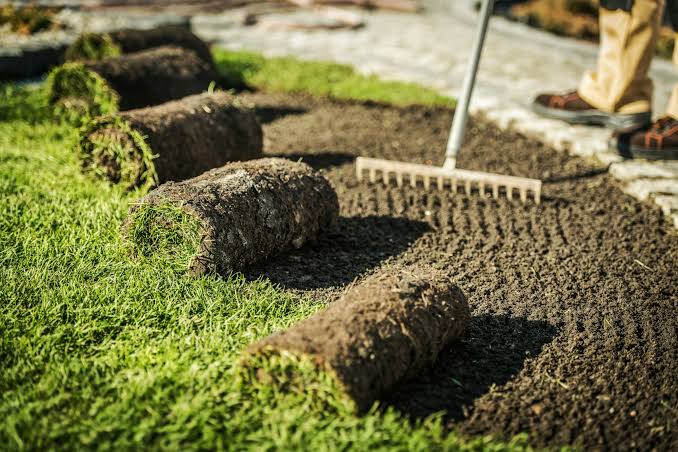
For a standard lawn, I would treat “normal” as a yard that already drains reasonably well, has no major grading problems, and needs only light soil prep; if you are unsure, consult a local contractor or extension office and compare the site with guidance from the University of Florida IFAS or similar sources. Then the installer may remove weeds, loosen the top layer, level shallow dips, roll out sod in staggered seams, and water it in. But once the site starts needing topsoil, grading, or tear-out of an existing lawn, the bill moves fast.
Square footage is the easiest way to think about it. Sod itself is usually priced by the pallet or by the square foot, while installation is often quoted by the square foot or as a lump sum. A smaller lawn still costs more per square foot than a large one because travel, setup, and cleanup do not shrink proportionally. Funny how that works.
I would not hire purely on the lowest number unless the quote clearly says what happens with:
– old turf removal
– soil amendment or topsoil
– grading
– edging
– sprinkler adjustments
– haul-away and disposal
Those line items are where a “cheap” job turns into a surprise bill.
How much should I expect to pay for sod installation?
Expect the total to be driven by lawn size and prep work, with small yards paying a higher rate per square foot than bigger ones. If you want a simple planning number, many sod projects end up feeling expensive because you are paying for a live product and skilled labor at the same time. That combo bites.
I cannot give you a single honest dollar figure that fits every market, because local labor rates, freight, and seasonal supply change the price too much. What I can say is that the quote should usually separate these buckets:
- Sod material
- Delivery
- Labor to install
- Ground preparation
- Removal and disposal of the old lawn
- Cleanup and first watering
That split matters more than the grand total. A quote that is 20% lower but excludes removal can end up costing more than the “higher” quote once you add the missing work.
For a typical lawn, I would expect a contractor to ask about square footage and site condition before giving a firm number. If a contractor gives a flat price without asking whether the yard has clay soil, a slope, or a dead lawn that needs to be stripped, I would treat that as a warning sign and would ask for a site visit or a written scope, as recommended by many local extension services. Ask twice if needed.
Here is the practical rule I would use: if the lawn is small and the surface is rough or full of weeds, expect the per-square-foot cost to be high. If the lawn is larger and the grading is already close, the unit cost usually falls.
What changes the price the most?
Prep is usually the biggest price driver, not the sod itself. That is the part many generic articles get wrong. People fixate on the grass and forget that the ground underneath decides whether the sod survives.
The main cost drivers are these:
- Removing the existing lawn: If the old turf has to be stripped, hauled away, and disposed of, labor rises quickly.
- Grading and leveling: A yard with dips, mounds, or drainage issues needs more machine or hand work.
- Soil quality: Thin, compacted, or poor soil may need topsoil, compost, or tilling.
- Access: If crews cannot bring equipment close to the yard, labor time goes up.
- Slope: Steep ground takes longer to cut and set cleanly.
- Irrigation: Sprinkler heads, broken lines, or a system that needs adjustment can add cost.
- Season: Hot weather raises the risk of sod failure, so some installers are more selective about timing.
A lawn in Houston on heavy clay, for example, may need different prep than a lawn in Denver with faster-draining soil. In wetter climates, drainage matters more; in hotter climates, watering logistics matter more. So a local contractor should be able to explain the ground, not just quote the grass. Otherwise, you are buying a black box.
I would also ask what sod species the quote covers. The right grass depends on sun, shade, and region, and the USDA and university extension guidance both stress matching turf to local conditions. A mismatched grass can thin out even when the installation price looks fine. That is not just a pricing issue; it is a suitability issue.
Sod or seed: which is the better buy?
Sod wins when you need a finished lawn fast and you are willing to pay for that speed. Seed wins when the budget is tight and you can wait through establishment. Plain and simple.
Sod gives you immediate coverage. It is the better choice if you are dealing with erosion, a house that is about to be listed, a side yard that has to look presentable soon, or a family that cannot babysit a bare lot for six to eight weeks. It also helps where rainstorms would wash seed away or where weeds would outcompete slow germination.
Seed is cheaper because you are buying less labor and no mature turf. But the trade-off is time and uncertainty. You need watering discipline, warmer or more favorable weather, and patience for patchy germination. If you want a lawn that looks like a lawn this month, seed is the wrong tool.
The honest side-by-side
| Criteria | Sod | Seed | Winner for [condition] |
|---|---|---|---|
| Upfront cost | Higher because you buy mature turf and installation labor | Lower because material is cheaper and labor is lighter | Seed for tight budgets |
| Time to usable lawn | Fast; often looks finished immediately after installation | Slow; establishment can take weeks to months | Sod for fast curb appeal |
| Failure risk | Lower if installed correctly, but still sensitive to poor prep and watering | Higher because germination depends on weather, moisture, and weed pressure | Sod for difficult sites |
| Watering demand | Heavy at first, then tapers | Frequent during germination and early growth | Tie, depending on your schedule |
| Weed competition | Lower at the start because the lawn begins as turf | Higher because bare soil invites weeds | Sod for weed-prone yards |
| Soil prep tolerance | Less forgiving; uneven prep shows up quickly | More forgiving of small surface flaws | Seed for imperfect budgets |
| Erosion control | Immediate | Slow | Sod for slopes and wash-prone areas |
| Seasonal flexibility | Better in a narrow installation window | Broader, but still season-dependent | Seed for off-season planning |
| Visual result on day one | Strong | Poor | Sod for real estate or events |
My recommendation is simple: choose sod if the yard needs to look finished now and the site can support proper prep. Choose seed if you can wait, water consistently, and accept a less predictable result.
What a bad sod job looks like
A bad sod job is not subtle. Usually, you can spot it within days or weeks.
The most common signs are:
– visible seams that never knit together
– edges that curl up or dry out
– gaps where sod pieces were cut too small
– low spots that collect water
– high spots that dry faster than the rest
– footprints or roller marks left in soft soil
– grass that turns yellow in strips because watering coverage is uneven
A poor install often traces back to rushed prep. If the contractor laid sod over compacted dirt, old roots, or debris, the lawn may look acceptable at first and then decline. If the seams were lined up like bricks in a straight grid instead of staggered, you will often see rows as the lawn matures. If the installer skipped rolling or final watering, the sod can dry out at the corners.
I would also watch for a quote that promises “no prep needed” on a yard that obviously needs grading. That is not efficiency; it is deferred failure. Sod needs contact with soil. Without that, roots struggle, and the lawn becomes expensive top dressing.
If you are hiring, ask how the installer handles:
– soil compaction
– seam staggering
– watering on install day
– grade correction
– warranty terms, if any
A contractor does not need to promise perfection, but they should be able to explain how they avoid the obvious failures.
When should you get multiple bids?
Get multiple bids when the yard is bigger than a small patch, when the site has drainage issues, or when the first quote bundles several unclear line items. Two or three bids are enough for most homeowners.
I would especially compare bids if:
– one contractor includes removal and another does not
– one quotes by square foot and another uses a flat total
– one recommends topsoil and another says the existing soil is fine
– one is pushing a grass type that does not match your climate
– one timeline is unusually short without explaining why
The goal is not to find the cheapest installer. It is to find the one whose scope matches your yard. A good bid for a 1,200-square-foot lawn in Atlanta will not look the same as a good bid for a shaded yard in the Pacific Northwest or a sandy yard in South Florida.
I would also ask how long the crew expects the job to take. For a typical residential lawn, a simple install may be a one-day job, but soil repair, removal, or larger square footage can push it longer. If a contractor quotes a very large lawn as a one-day job with major prep included, that is worth questioning. Some promises are too neat.
When does sod stop being the right answer?
Sod stops being the right answer when the site is too expensive to prep, too shaded for the chosen grass, or too poor in drainage for turf to survive without major correction.
I would reconsider sod entirely if:
– the yard needs substantial regrading or drainage work
– the budget only allows a cosmetic fix, not proper prep
– the property gets deep shade and the recommended grass will struggle
– you are trying to cover a very large area and can live with a slower timeline
– the water bill after installation would be a problem
There are also climate cases where the answer changes. In hot southern regions, a warm-season grass can make sense, but the installation window and watering burden matter. In colder regions, a cool-season grass may fit better, but late-season installs can be risky if roots do not establish before freeze-up. A local installer should be able to name the grass by type and explain why it suits your yard.
My position is firm: sod is worth paying for when the site is ready or can be made ready without major excavation. It is not the right fix for a neglected yard that really needs drainage repair first.
What should I ask before I sign a sod estimate?
You should ask five things before you sign: what is included, what is excluded, what grass they are using, how they handle prep, and what happens if the lawn struggles after install.
I would ask:
1. Does this include removing the old lawn?
2. Does this include grading and topsoil, or only laying sod?
3. What type of sod are you installing, and why is it right for my site?
4. How many days of watering do you expect from me right after install?
5. What does the warranty cover, if anything?
If the installer cannot answer those plainly, keep shopping. A clear bid is usually a sign of a clear job. A fuzzy bid often means a fuzzy lawn later.
FAQ
How long does sod installation usually take?
For a typical residential lawn, a simple job can be finished in about a day, but larger yards or yards that need grading, removal, or irrigation work can take longer.
Is sod more expensive than seeding?
Yes. Sod usually costs more upfront because you are buying mature turf and labor, while seed costs less but takes longer and is less predictable.
Do I need topsoil before sod?
Not always, but if the existing soil is compacted, thin, or uneven, topsoil or soil amendment may be worth the extra cost because sod roots into the layer beneath it. A local extension office or landscaper can tell you whether the yard needs it.
Can I install sod myself to save money?
Yes, but only if the yard is small, the grade is already close, and you can move fast. Sod dries out quickly, so a DIY job becomes risky on larger lawns.
What is the biggest mistake people make?
They buy sod without paying for proper prep. Laying good grass over bad ground is one of the fastest ways to waste money.